

To understand how to recondition your back, beyond the idea that certain exercises promise to do that, you need to understand what's behind most back pain and what back exercises must do to alleviate it.
There
are more-effective and less-effective systems of exercise for the
relief of back pain. Advocates of strengthening and stretching exercises
point to yoga, Pilates, therapy ball exercises, and various programs of
stretches. These exercises have a degree of efficacy with mild to
moderate back pain; with more severe cases, however, a specific kind of
exercise is needed for fast and definitive improvement (days or weeks,
rather than months or years).
Numerous writers on back exercises
for lower back pain say back exercises can provide relief, even
long-term relief. Therapeutic exercises form a key part of any physical
therapy program for back pain.
First, a brief overview of back pain:
Overview
Most
back pain comes from muscles triggered to stay tight by brain-level
conditioning. "Conditioning" means "learned or acquired habit patterns".
According to a writer at WebMD.com, on the topic, "Low Back Pain - Cause"...
Most low back pain is triggered by some combination of overuse, muscle strain, and injury to the muscles, ligaments, and discs that support the spine.
Muscle strain generally means, "musclebound" muscles; musclebound muscles generate pain through muscle fatigue and soreness.
If
muscles are tight, it's because the brain is triggering them into a
state of tightness. The technical term would be, "conditioned postural
reflex". "Reflex" means "on automatic". So, most back pain comes from
acquired habit patterns that keep muscles tight on automatic. Pain
follows.
Tight back muscles pull vertebrae (back bones) tight and
close together, causing friction between neighboring vertebrae (facet
joints), leading to facet joint irritation (facet joint syndrome). At
the same time, they cause spinal misalignment ("subluxation"), compress
discs, leading to disc breakdown ("degenerative disc disease"), disc
bulges (herniation), nerve root entrapment (e.g., sciatica), eventual
disc rupture, extrusion of disc material (nucleus pulposus) and pressure
on nerve roots, and eventual disc fusion. That about covers the range
conditions associated with back pain -- and, except for violent
accidents, they all trace back to neuromuscular conditioning.
How Does Neuromuscular Conditioning Develop?
Another
name for neuromuscular conditioning is habits of posture and movement.
Most movements, you may notice, occur on automatic once set into motion.
That's because you've learned them previously and now only need to
intend them for them to occur and to make minor adjustments of movement
to meet the need of your activity.
In other words, you've learned habits of movement.
That's
how excessive back muscle tension and back pain form: the formation of a
back-muscle tension habit, through any of these three routes:
repetitive motion, violent accident, or emotional stress. All make their
impression on "movement memory" ("muscle memory"); all lead to and
underlie most back pain.
That simplifies matters: When we think of
learning, we think of memories formed by repetition, drill, and an
experience of some intensity. In other words, repetitive motions and
accidents produce enough of an impression on the brain to create a
memory of "how movement should be" to create a tension habit and habits
of movement.
Understanding The Way Out
Most articles on back pain revolve around a few common approaches:
- strengthening
- stretching
- warming up before activity
- good posture
- good structural support
All of these approaches
are ways of coping with a poorly conditioned back. However, they don't
go deeply enough to change that conditioning to the point of a
definitive end to back trouble.
Let's hear from some of these writers, just to be able to make my point in relation to something specific.
With
regard to dynamic lumbar stabilization exercises, writer Nishanth Reddy
has this to say in his article, "Physical Therapy for the Lower Back:
How to Prevent and Treat Lower Back Pain":
... the first thing that a physical therapist does is to look for the patient's "neutral" spine; [a]fterwards, when the patient is in that position, the back muscles are then exercised in order to "teach" the spine how to stay in this position.
The basic error in this
kind of thinking is of "teaching the spine how to stay in this
position." You can't bend over, you can't twist, you can scarcely move
while keeping your spine in a neutral position. So, regardless of
whether it is the standard of treatment for back pain, it is limiting
and impractical and we can scarcely consider it a definitive cure for
back pain -- and I think you will find that therapists agree with me.
Dr.
Graeme Teague, an accepted expert in the structural field, advocates
releasing tension in the hip flexors and improving the strength of the
abdominals. While releasing tension in the hip flexors allows for a more
erect carriage of posture, improving the strength of the abdominals
does not change the conditioning of the back muscles, but only brings
temporary relief as long as the person keeps their abdominal muscles
tight -- not needed by someone with a normal or healthy back.
On
the website for The National Institute of Neurologic Disorders and
Stroke, on the topic, "How is back pain treated?" the writer states:
Exercise may be the most effective way to speed recovery from low back pain and help strengthen back and abdominal muscles.
Since
the brain controls the tension and strength of muscles, and through
that, muscle tension, length and posture, the brain's control of
muscular action is a major key to ending back pain.
In other
words, the effect of strengthening and stretching exercises comes almost
entirely from learning better control of back muscle action. It's not
"added strength" or "added stretch", but added control, which regulates
muscle strength and length (degree of "stretch" and tendency to spasm),
posture, and degree of muscle fatigue (soreness).
Since our brain
has learned its way into your back pain, we must teach it the way out.
That's the key to effective back exercises.
That point understood,
we understand that the most direct route back to comfort is learning
better regulation of muscle tension and movement, which leads to better
posture and movement and which leads out of strain to ease. That kind of
learning works in reverse to the other kind of conditioning that
creates back pain to create a new, automatic, healthier pattern of back
muscle conditioning. That kind of learning makes efforts at "maintaining
good posture", "maintaining neutral spine position", or "holding
adjustments" unnecessary -- unnecessary because your good condition is
now automatic, your new baseline or habit of natural movement -- like
anyone else with a good back.
As with all methods and techniques
for accomplishing anything, there exist more effective ways and less
effective ways. First, a description of a less effective way: A quote
from writer, Dave Powell, in his article, "Ouch! Prevent Lower Back
Pain!", makes my point.
First, notice the regimen he recommends, then notice, in his own words, the expected outcome:
First of all..., [w]hen you stand up, stand tall, tuck in your chin and then tuck your tail in.
This
recommendation amounts to holding a certain posture and alignment.
While there's a measure of truth in his recommendation (e.g., good
ergonomics in your work situation), his recommendation instills
additional patterns of muscular holding (tension) to counter the
habitual ones.
... lower back pain prevention means you must think and plan before you carry out a tough task. This will minimise the stress you put upon your back and very much reduce the risk of episodes of lower back pain.
In other words, he implies that you can't be care-free about your movements and expect to be free of back pain.
I
differ from these writers. I say (based on my experience and that of my
colleagues in the field of clinical somatic education, who have worked
with thousands of clients over the years). If you recondition your back
muscle control, rather than merely strengthen or stretch muscles -- or
limit your posture and movement -- you can have healthy back without
concern for maintaining posture and alignment, without concern for pain
or for a "bad back" -- because your habits of movement are already
automatically healthy.
Even if you may be skeptical -- and I can
understand why you would be -- do you like that idea? What I say is
doable and my words are testable. See the links at the end of this
article for free instructional video that teaches somatic exercises for
back pain.
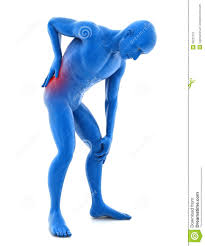
Learning to Control -- and so to Free -- Your Back Muscles
If
you have back trouble, almost certainly your back muscles are
musclebound and out of your control, held tight by brain-level
conditioning that keeps them tight, out of reach of strengthening,
stretching, or efforts at good posture or correct movement.
To
recondition your back muscles better is to free yourself from painful
conditioning that keeps them tight, and so to establish a new,
healthier, automatic (second-nature) pattern of movement. The result is
freedom from back pain as a person with a healthy back.
Moreover,
it doesn't matter, in most cases, how long you have been in your
condition; you can correct it fairly quickly using an approach that
treats the underlying cause.
That's it, in principle.
An Entirely Different (new) Form of Therapeutic Exercise
Somatic
exercises free you from habituated back muscle tension and establish a
healthier pattern by dissolving the grip of the old habit pattern and
imprinting a new sense of movement and control into your memory. In
other words, they teach your brain a new pattern of muscular control.
The
way they dissolve the grip of the old habit pattern is by triggering,
in the problem areas, a neuromuscular response similar to yawning. That
action, called "pandiculation", involves your deliberately contracting
the musclebound muscles in specific positions and then slowly releasing
the contraction; it refreshes voluntary control of movement sufficiently
to shift control from conditioned reflexes, to your voluntary control.
The immediate result is a relaxation of habitual tension patterns. The
way they teach your brain a new pattern of control is the same way as
you learn any other pattern of control: by practicing the new pattern
until it is as familiar to you as the old pattern. At that point, you're
set free; you don't have to hold on to the new pattern because it's a
pattern of freedom.
You can see such exercises in the links, below, to free instructional videos of somatic exercises for back pain.
Because
somatic exercises are designed specifically for learning muscular
control ("muscle memory" or "movement memory"), they target the central
process of effective back exercises for lower back pain (and other
locations of pain, as well) and accomplish what is ordinarily sought
through strengthening, stretching, efforts at good posture or good body
mechanics.
Here are the elements of somatic exercises.
Somatic exercises are...
- slow
- comfortable
- patterned movements
that, by establishing new memories of how movement feels...
- relieve pain
- free the muscles
- develop new, low-strain patterns of movement
- coordinate movement better
- improve strength
... all of which result in natural, easy movement in comfort.
CONCLUSION
What
I've done in this article is highlight standard ways of treating back
pain to illuminate their underlying principles and their degree of
efficacy, then present and explain an alternative that accomplishes all
they seek to accomplish.
The proof of the pudding is in the eating.
ARTICLE and VIDEO: Somatic Back Exercises for Lower Back Pain
To PREVIEW the program, "Free Yourself from Back Pain -- 9 Movements for a Back You Can Trust All the Time", send blank email to back2@somatics.com
continuing with...
An Entirely New Class of Therapeutic Exercises
Lawrence Gold is a long-time practicing clinical somatic educator certified in The Rolf Method of Structural Integration and in Hanna Somatic Education, with two years' hospital rehab center experience (Watsonville Community Hospital Wellness and Rehabilitation Center: 1997-1999) and articles published in The American Journal of Pain Management (Pain Relief through Movement Education: January, 1996, Vol. 6, no. 1, pg. 30) and in The Townsend Letter for Doctors and Patients (A Functional Look at Back Pain and Treatment Methods: November, 1994, #136, pg. 1186 ).
To PREVIEW the program, "Free Yourself from Back Pain -- 9 Movements for a Back You Can Trust All the Time", send blank email to back2@somatics.com
continuing with...
An Entirely New Class of Therapeutic Exercises
Lawrence Gold is a long-time practicing clinical somatic educator certified in The Rolf Method of Structural Integration and in Hanna Somatic Education, with two years' hospital rehab center experience (Watsonville Community Hospital Wellness and Rehabilitation Center: 1997-1999) and articles published in The American Journal of Pain Management (Pain Relief through Movement Education: January, 1996, Vol. 6, no. 1, pg. 30) and in The Townsend Letter for Doctors and Patients (A Functional Look at Back Pain and Treatment Methods: November, 1994, #136, pg. 1186 ).
Article Source:
http://EzineArticles.com/?expert=Lawrence_Gold

No comments:
Post a Comment