
If you are planning the purchase of a complete solar panel system or if you are shopping for parts to assemble your own solar panels you want to make sure to purchase the best solar panels for your individual purpose. This article puts up some basic information on solar panels to help you make the right decision.
One thing right at the
beginning, there is nothing like "the world's best solar panels for
everyone." It makes a big difference whether you want to generate
electricity for your home and even feed surplus capacity in the power
grid or if you want to charge a car battery now and then. And producing
hot water from a solar installation needs actually a complete different
technology. In narrower sense those so called "thermal solar collectors"
or "solar collectors" are not even proper solar panels. So what's the
difference?
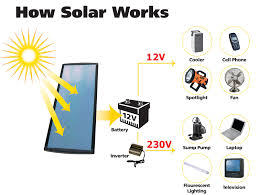
Solar panels (photovoltaic panels, photovoltaic
modules) convert shortwave radiation, e.g. parts of the sunlight, into
electrical power. They consist of interconnected solar cells which are
protected by a range of different materials. The surface is transparent
and the solar panel is framed, mostly in an aluminum frame.
Solar
collectors on the other hand, are a system of liquid filled tubes.
Sunlight heats up the tubes and the liquid. A heat exchanger now
transfers the heat to the facility water circuit for warm water and
heating. Since this article discusses "best solar panels" let's get back
to generating electricity out of sunlight and save solar collectors for
another article.
Before you purchase solar panels make sure you
take a close look at the Solar Panel Specification Sheet. It gives you
vital details of the particular solar module and helps you choose the
best solar panels for your purpose. You may want to look especially at
the following data:
Solar cell itself - what kind of semiconductor material is being used?
-- Monocrystalline silicon cells (c-Si) have an efficiency degree of more than 20%
-- Polycrystalline silicon cells (mc-Si) have an efficiency of 16%
-- Flat film amorphous silicon cells (a-Si) have an efficiency of 5%--7% (best solar panels in sales at
thetime)
-- Microcrystalline silicon cells (µc-Si) in combination with a-Si cells have up to 10%
-- Gallium-Arsenik cells (GaAs), Cadmium-Tellur cells (CdTe) and Chalkopyrite cells (CIS, CIGS) have degrees of efficiency from 10 to over 40% (GaAs). They are not (yet) suitable for most private customers, because either they are very expensive or they are not fully developed, yet.
-- Panels containing organic solar cells may become the best solar panels in the future, as they can be produced at relatively low costs. At this time their efficiency is still low (pigmented Grätzel-cells have max. 10 %, others are lower) and their life expectancy is short (5000 hours). But keep them in mind for portable electric devices.
-- Polycrystalline silicon cells (mc-Si) have an efficiency of 16%
-- Flat film amorphous silicon cells (a-Si) have an efficiency of 5%--7% (best solar panels in sales at
thetime)
-- Microcrystalline silicon cells (µc-Si) in combination with a-Si cells have up to 10%
-- Gallium-Arsenik cells (GaAs), Cadmium-Tellur cells (CdTe) and Chalkopyrite cells (CIS, CIGS) have degrees of efficiency from 10 to over 40% (GaAs). They are not (yet) suitable for most private customers, because either they are very expensive or they are not fully developed, yet.
-- Panels containing organic solar cells may become the best solar panels in the future, as they can be produced at relatively low costs. At this time their efficiency is still low (pigmented Grätzel-cells have max. 10 %, others are lower) and their life expectancy is short (5000 hours). But keep them in mind for portable electric devices.
Solar module efficiency
Always
look at the efficiency of the total solar module, not only of the
individual solar cell and be aware that high efficiency degrees are
nothing without a high minimum warranted power rating. (see next
paragraph)
Solar module power rating
It tells you about the
wattage of the particular solar electric module. Make sure to check the
(warranted) minimum power since the maximum power, stated in Peak Watt
(Wp), is always measured under standard test conditions (STC). As you
know, nature is not a laboratory. It provides real live conditions and
they can differ surprisingly in many ways.
Operation voltage
Open
circuit voltage, stated in Volts (V), is the maximum voltage a solar
cell produces when illuminated and not connected to a load. The hotter
the Solar Panels get, the lower the open circuit voltage gets.
Temperature operating range (TOR)
As
mentioned above, operation voltage decreases with increasing
temperatures. Make sure the TOR suits your local climate conditions.
Construction
Consider
that you are purchasing a fragile high tech product that may be
installed on your rooftop and should be be able to withstand roasting
sun as well as wind, hail and heavy snow loads. Choose the right
mounting system. Medium duty is good, heavy duty is better. The best solar panels are useless when blown down the roof and crashed on the ground.
Dimensions
Compare the panel dimensions to the active area to avoid a waste of space.
Inverter
An
inverter converts the solar produced electricity (direct current, DC)
to alternate current (AC). Look for inverters with heavy duty copper
wound output transformers. You set it and forget it. Otherwise you will
have your inverter getting repaired or replaced - sooner or later. In
worst case that can become necessary on a regular basis. This is no fun
and a waste of time and money.
Warranty
20 - 25 years
warranty on mono- and polycrystalline silicon solar panels are common.
This should be the minimum when purchasing solar panels, since today
best solar panels have life expectancies of 30 years and even longer.
Take a look at the factory warranty and do not accept only a dealer's
warranty.
Now it's up to you to choose the best solar panels for
your needs. Take your time to compare different panels, inverters and
mounting systems. If you want to purchase a complete solar system and
get it installed, contact more than one dealer. Now you can ask them the
right questions.
Learn how to cheaply make your own solar panels with your own copy of "Home Made Energy"
Learn how to cheaply make your own solar panels with your own copy of "Home Made Energy"
If you can find a
high-quality manual, you will start enjoying the benefits of DIY solar
panels within 2 weeks, because the manual should be able to teach you to
build homemade solar energy panels in just a weekend.
If you've enjoyed all the exciting information you read here about Homemade solar panels you'll love everything else you find at DIY Solar Panels.
In the following I have listed some manufacturers of solar panels, that made it into the Top 3 of ENF's 2007 brand survey on the world's best solar panels. ENF is a reputable photovoltaic information company located in China and in the U.K.
The survey gives you a good starting point to find the right panel
for you. Please keep in mind that 2 years can be a long time in hightech
business so do not rely blindly on the results. For actual info check
my blog from time to time (see below). Here are the ENF results:
Best Solar Panels
Global No.1 Brand: SunPower (USA)
Global No.2 Brand: Schott Solar (Germany)
Global No.3 Brand: Solar World (Germany)
Global No.2 Brand: Schott Solar (Germany)
Global No.3 Brand: Solar World (Germany)
No.1 Product Quality: Sanyo (Japan)
No.1 VAlue for Money: Suntech Power (China)
No.1 VAlue for Money: Suntech Power (China)
Best Solar Panel Inverters
Global No.1 Brand: Kaco new energy (Germany)
Global No.2 Brand: OutBack Power Systems (USA)
Global No.3 Brand: Mastervolt (the Netherlands)
Global No.2 Brand: OutBack Power Systems (USA)
Global No.3 Brand: Mastervolt (the Netherlands)
No.1 Product Quality: OutBack Power Systems (USA)
No.1 Value for Money: Kaco new energy (Germany)
No.1 Value for Money: Kaco new energy (Germany)
Best Solar Panel Mounting Systems
Global No.1 Brand: Direct Power & Water (USA)
Global No.2 Brand: UniRac (USA)
Global No.3 Brand: Schüco (Germany)
Global No.2 Brand: UniRac (USA)
Global No.3 Brand: Schüco (Germany)
Best Solar Trackers
Global No.1 Brand: Zomeworks (USA)
Best Solar Systems
Global No.1 Brand: Sharp (Japan)
Ulrich Lahn is an Internet Marketer, Business Coach and
Consultant. He is passionate about his family, renewable energy
(especially solar power), MindMapping and playing guitar.
Best Solar Panels [http://www.best--solar--panels.com].
Electric Solarpanels and Solar Collectors [http://www.best--solar--panels.com/best-solar-panels/best-solar-panels].
Best Solar Panels [http://www.best--solar--panels.com].
Electric Solarpanels and Solar Collectors [http://www.best--solar--panels.com/best-solar-panels/best-solar-panels].
Article Source:
http://EzineArticles.com/?expert=Rick_Lahn

No comments:
Post a Comment