Watch this free video now

Showing posts with label bit coin. Show all posts
Showing posts with label bit coin. Show all posts
Sunday, 31 May 2015
Top 10 Bitcoin Facts
To get the best start with Bitcoins go to http://tinyurl.com/m9lm96d and be on your way to earning the income you deserve.

Tuesday, 19 May 2015
How Bitcoin Works
Bitcoins are a decentralized form of crypto currency. Meaning, they are not regulated by a financial institution or the government. As such, unlike a traditional bank account, you do not need a long list a paperwork such as an ID in order for you to establish what's known as a bitcoin wallet. The bitcoin wallet is what you will use to access your bitcoins and to send bitcoins to other individuals.
How To Setup An Account
You
can acquire a bitcoin wallet from a bitcoin broker such as Coinbase.
When you open up a wallet through a certified broker, you are given a
bitcoin address which is a series of numbers and letters, similarly to
an account number for a bank account and a private key which is a series
of numbers and letters as well, which serve as your password.
How Does Bitcoin Work As An Anonymous Payment Processor
You
can do 3 things with bitcoins, you can make a purchase, send money
anonymously to someone or utilize it as an investment. More and more
merchants have been accepting bitcoins as a form of payment. By
utilizing bitcoins instead of cash, you are essentially making that
purchase anonymously. The same thing goes for sending money, based on
the fact that you do not have to submit a mountain of payment in order
for you to establish a bitcoin anonymously, essentially you can send
money to someone else anonymously.
How Does Bitcoin Work As An Investment
The
price of a bitcoin fluctuates from time to time. Just to put things in
perspective, back in the beginning of 2013, the average price of a
bitcoin was approximately $400 per bitcoin, but by the end of 2013, the
price for bitcoin rose to over $1000. This meant that if you had 2
bitcoins worth $800 in the beginning of 2013 and you stored it as an
investment by the end of 2013 those two bitcoins would have been worth
over $2000 instead of $800. Many people store bitcoins due to the fact
that the value of it fluctuates.
Bitcoin Casino and Poker Sites
Due
to the anonymity of bitcoin the gambling industry has taken up bitcoin
as a payment method. Both bitcoin casinos and bitcoin poker sites are
coming to life and offering their players to make deposits, play with
bitcoin at the tables and withdraw directly to their bitcoin wallet.
This means that there's no taxes or possibilities for government
control. Much like a regular Nevada casino where do you don't need to
register anywhere and all your transactions are anonymous.
How Do You Send Bitcoin
In
order for you to pay for goods and services or to send bitcoins to an
individual, 3 things are needed. Your bitcoin address, your private key
and the individual's bitcoin address. From that point, through your
bitcoin wallet, you will put 3 pieces of information, which are: input,
balance and output. Input refers to your address, balance refers to the
amount of bitcoins you are going to send and output is the recipient's
address.
Learn more about how it works and find bitcoin casinos and bitcoin poker sites
at RealMobileCasinos.com. Here we explain further about how to use this
currency and how everything works with the wallet and where to best get
your own wallet. We also explain further on the use for online casino
and also for other areas. This is a very exciting currency. With many
possible areas of usage.
To get the best start with Bitcoins go to http://tinyurl.com/m9lm96d and be on your way to earning the income you deserve.
We also provide in depth reviews of mobile casinos and an extensive guide to gaming online. You can play for free and take up free spins offers and free bonuses. Or you can read further about your favorite casino game.
To get the best start with Bitcoins go to http://tinyurl.com/m9lm96d and be on your way to earning the income you deserve.
We also provide in depth reviews of mobile casinos and an extensive guide to gaming online. You can play for free and take up free spins offers and free bonuses. Or you can read further about your favorite casino game.
Article Source:
http://EzineArticles.com/?expert=Peter_Anderton
Tuesday, 5 May 2015
In Bitcoin We Trust?
By now you have probably heard of Bitcoin, but can you define it?
Most
often it is described as a non-government digital currency. Bitcoin is
also sometimes called a cybercurrency or, in a nod to its encrypted
origins, a cryptocurrency. Those descriptions are accurate enough, but
they miss the point. It's like describing the U.S. dollar as a green
piece of paper with pictures on it.
I have my own ways of
describing Bitcoin. I think of it as store credit without the store. A
prepaid phone without the phone. Precious metal without the metal. Legal
tender for no debts, public or private, unless the party to whom it is
tendered wishes to accept it. An instrument backed by the full faith and
credit only of its anonymous creators, in whom I therefore place no
faith, and to whom I give no credit except for ingenuity.
I wouldn't touch a bitcoin with a 10-foot USB cable. But a fair number of people already have, and quite a few more soon may.
This
is partly because entrepreneurs Cameron and Tyler Winklevoss, best
known for their role in the origins of Facebook, are now seeking to use
their technological savvy, and money, to bring Bitcoin into the
mainstream.
The Winklevosses hope to start an exchange-traded fund
for bitcoins. An ETF would make Bitcoin more widely available to
investors who lack the technological know-how to purchase the digital
currency directly. As of April, the Winklevosses are said to have held
around 1 percent of all existent bitcoins.
Created in 2009 by an
anonymous cryptographer, Bitcoin operates on the premise that anything,
even intangible bits of code, can have value so long as enough people
decide to treat it as valuable. Bitcoins exist only as digital
representations and are not pegged to any traditional currency.
According
to the Bitcoin website, "Bitcoin is designed around the idea of a new
form of money that uses cryptography to control its creation and
transactions, rather than relying on central authorities." (1) New
bitcoins are "mined" by users who solve computer algorithms to discover
virtual coins. Bitcoins' purported creators have said that the ultimate
supply of bitcoins will be capped at 21 million.
While Bitcoin
promotes itself as "a very secure and inexpensive way to handle
payments," (2) in reality few businesses have made the move to accept
bitcoins. Of those that have, a sizable number operate in the black
market.
Bitcoins are traded anonymously over the Internet, without
any participation on the part of established financial institutions. As
of 2012, sales of drugs and other black-market goods accounted for an
estimated 20 percent of exchanges from bitcoins to U.S. dollars on the
main Bitcoin exchange, called Mt. Gox. The Drug Enforcement Agency
recently conducted its first-ever Bitcoin seizure, after reportedly
tying a transaction on the anonymous Bitcoin-only marketplace Silk Road
to the sale of prescription and illegal drugs.
Some Bitcoin users
have also suggested that the currency can serve as a means to avoid
taxes. That may be true, but only in the sense that bitcoins aid illegal
tax evasion, not in the sense that they actually serve any role in
genuine tax planning. Under federal tax law, no cash needs to change
hands in order for a taxable transaction to occur. Barter and other
non-cash exchanges are still fully taxable. There is no reason that
transactions involving bitcoins would be treated differently.
Outside
of the criminal element, Bitcoin's main devotees are speculators, who
have no intention of using bitcoins to buy anything. These investors are
convinced that the limited supply of bitcoins will force their value to
follow a continual upward trajectory.
Bitcoin has indeed seen
some significant spikes in value. But it has also experienced major
losses, including an 80 percent decline over 24 hours in April. At the
start of this month, bitcoins were down to around $90, from a high of
$266 before the April crash. They were trading near $97 earlier this
week, according to mtgox.com.
The Winklevosses would make Bitcoin
investing easier by allowing smaller-scale investors to profit, or lose,
as the case may be, without the hassle of actually buying and storing
the electronic coins. Despite claims of security, Bitcoin storage has
proved problematic. In 2011, an attack on the Mt. Gox exchange forced it
to temporarily shut down and caused the price of bitcoins to briefly
fall to nearly zero. Since Bitcoin transactions are all anonymous, there
is little chance of tracking down the culprits if you suddenly find
your electronic wallet empty. If the Winklevosses get regulatory
approval, their ETF would help shield investors from the threat of
individual theft. The ETF, however, would do nothing to address the
problem of volatility caused by large-scale thefts elsewhere in the
Bitcoin market.
While Bitcoin comes wrapped in a high-tech veneer,
this newest of currencies has a surprising amount in common with one of
the oldest currencies: gold. Bitcoin's own vocabulary, particularly the
term "mining," highlights this connection, and intentionally so. The
mining process is designed to be difficult as a control on supply,
mimicking the extraction of more conventional resources from the ground.
Far from providing a sense of security, however, this rhetoric ought to
serve as a word of caution.
Gold is an investment of last resort.
It has little intrinsic value. It does not generate interest. But
because its supply is finite, it is seen as being more stable than forms
of money that can be printed at will.
The problem with gold is
that it doesn't do anything. Since gold coins have fallen out of use,
most of the world's gold now sits in the vaults of central banks and
other financial institutions. As a result, gold has little connection to
the real economy. That can seem like a good thing when the real economy
feels like a scary place to be. But as soon as other attractive
investment options appear, gold loses its shine. That is what we have
seen with the recent declines in gold prices.
In their push to
bring Bitcoin to the mainstream, its promoters have accepted, and, in
some cases sought out, increased regulation. Last month Mt. Gox
registered itself as a money services business with the Treasury
Department's Financial Crimes Enforcement Network. It has also increased
customer verification measures. The changes came in response to a March
directive from Financial Crimes Enforcement Network clarifying the
application of its rules to virtual currencies. The Winklevosses'
proposed ETF would bring a new level of accountability.
In the
end, however, I expect that Bitcoin will fade back into the shadows of
the black market. Those who want a regulated, secure currency that they
can use for legitimate business transactions will pick from one of the
many currencies already sponsored by a national government equipped with
ample resources, a real-world economy and far more transparency and
security than the Bitcoin world can offer.
To get the best start with Bitcoins go to http://tinyurl.com/m9lm96d and be on your way to earning the income you deserve.
Souce:
Souce:
1) Bitcoin, "About Bitcoin"
2) Bitcoin, "Bitcoin for Businesses"
For more articles, please visit the Palisades Hudson Financial Group LLC newsletter or subscribe to the blog.
Newsletter: http://www.palisadeshudson.com/insights/sentinel/
Blog: http://www.palisadeshudson.com/insights/current-commentary/
Newsletter: http://www.palisadeshudson.com/insights/sentinel/
Blog: http://www.palisadeshudson.com/insights/current-commentary/
Article Source:
http://EzineArticles.com/?expert=Larry_M._Elkin
Tuesday, 21 April 2015
Bitcoin: What Is It, and Is It Right for Your Business?
OK, so what's Bitcoin?
It's not an actual coin, it's
"cryptocurrency," a digital form of payment that is produced ("mined")
by lots of people worldwide. It allows peer-to-peer transactions
instantly, worldwide, for free or at very low cost.
Bitcoin was
invented after decades of research into cryptography by software
developer, Satoshi Nakamoto (believed to be a pseudonym), who designed
the algorithm and introduced it in 2009. His true identity remains a
mystery.
This currency is not backed by a tangible commodity (such
as gold or silver); bitcoins are traded online which makes them a
commodity in themselves.
Bitcoin is an open-source product,
accessible by anyone who is a user. All you need is an email address,
Internet access, and money to get started.
Where does it come from?
Bitcoin
is mined on a distributed computer network of users running specialized
software; the network solves certain mathematical proofs, and searches
for a particular data sequence ("block") that produces a particular
pattern when the BTC algorithm is applied to it. A match produces a
bitcoin. It's complex and time- and energy-consuming.
Only 21
million bitcoins are ever to be mined (about 11 million are currently in
circulation). The math problems the network computers solve get
progressively more difficult to keep the mining operations and supply in
check.
This network also validates all the transactions through cryptography.
How does Bitcoin work?
Internet
users transfer digital assets (bits) to each other on a network. There
is no online bank; rather, Bitcoin has been described as an
Internet-wide distributed ledger. Users buy Bitcoin with cash or by
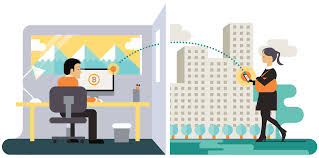
selling a product or service for Bitcoin. Bitcoin wallets store and use
this digital currency. Users may sell out of this virtual ledger by
trading their Bitcoin to someone else who wants in. Anyone can do this,
anywhere in the world.
There are smartphone apps for conducting mobile Bitcoin transactions and Bitcoin exchanges are populating the Internet.
How is Bitcoin valued?
Bitcoin
is not held or controlled by a financial institution; it is completely
decentralized. Unlike real-world money it cannot be devalued by
governments or banks.
Instead, Bitcoin's value lies simply in its
acceptance between users as a form of payment and because its supply is
finite. Its global currency values fluctuate according to supply and
demand and market speculation; as more people create wallets and hold
and spend bitcoins, and more businesses accept it, Bitcoin's value will
rise. Banks are now trying to value Bitcoin and some investment websites
predict the price of a bitcoin will be several thousand dollars in
2014.
What are its benefits?
There are benefits to consumers and merchants that want to use this payment option.
1. Fast transactions - Bitcoin is transferred instantly over the Internet.
2.
No fees/low fees -- Unlike credit cards, Bitcoin can be used for free
or very low fees. Without the centralized institution as middle man,
there are no authorizations (and fees) required. This improves profit
margins sales.
3. Eliminates fraud risk -Only the Bitcoin owner
can send payment to the intended recipient, who is the only one who can
receive it. The network knows the transfer has occurred and transactions
are validated; they cannot be challenged or taken back. This is big for
online merchants who are often subject to credit card processors'
assessments of whether or not a transaction is fraudulent, or businesses
that pay the high price of credit card chargebacks.
4. Data is
secure -- As we have seen with recent hacks on national retailers'
payment processing systems, the Internet is not always a secure place
for private data. With Bitcoin, users do not give up private
information.
a. They have two keys - a public key that serves as the bitcoin address and a private key with personal data.
b.
Transactions are "signed" digitally by combining the public and private
keys; a mathematical function is applied and a certificate is generated
proving the user initiated the transaction. Digital signatures are
unique to each transaction and cannot be re-used.
c. The
merchant/recipient never sees your secret information (name, number,
physical address) so it's somewhat anonymous but it is traceable (to the
bitcoin address on the public key).
5. Convenient payment system
-- Merchants can use Bitcoin entirely as a payment system; they do not
have to hold any Bitcoin currency since Bitcoin can be converted to
dollars. Consumers or merchants can trade in and out of Bitcoin and
other currencies at any time.
6. International payments - Bitcoin
is used around the world; e-commerce merchants and service providers can
easily accept international payments, which open up new potential
marketplaces for them.
7. Easy to track -- The network tracks and
permanently logs every transaction in the Bitcoin block chain (the
database). In the case of possible wrongdoing, it is easier for law
enforcement officials to trace these transactions.
8.
Micropayments are possible - Bitcoins can be divided down to one
one-hundred-millionth, so running small payments of a dollar or less
becomes a free or near-free transaction. This could be a real boon for
convenience stores, coffee shops, and subscription-based websites
(videos, publications).
Still a little confused? Here are a few examples of transactions:
Bitcoin in the retail environment
At
checkout, the payer uses a smartphone app to scan a QR code with all
the transaction information needed to transfer the bitcoin to the
retailer. Tapping the "Confirm" button completes the transaction. If the
user doesn't own any Bitcoin, the network converts dollars in his
account into the digital currency.
The retailer can convert that
Bitcoin into dollars if it wants to, there were no or very low
processing fees (instead of 2 to 3 percent), no hackers can steal
personal consumer information, and there is no risk of fraud. Very
slick.
Bitcoins in hospitality
Hotels can accept Bitcoin for
room and dining payments on the premises for guests who wish to pay by
Bitcoin using their mobile wallets, or PC-to-website to pay for a
reservation online. A third-party BTC merchant processor can assist in
handling the transactions which it clears over the Bitcoin network.
These processing clients are installed on tablets at the establishments'
front desk or in the restaurants for users with BTC smartphone apps.
(These payment processors are also available for desktops, in retail POS
systems, and integrated into foodservice POS systems.) No credit cards
or money need to change hands.
These cashless transactions are
fast and the processor can convert bitcoins into currency and make a
daily direct deposit into the establishment's bank account. It was
announced in January 2014 that two Las Vegas hotel-casinos will accept
Bitcoin payments at the front desk, in their restaurants, and in the
gift shop.
It sounds good - so what's the catch?
Business owners should consider issues of participation, security and cost.
•
A relatively small number of ordinary consumers and merchants currently
use or understand Bitcoin. However, adoption is increasing globally and
tools and technologies are being developed to make participation
easier.
• It's the Internet, so hackers are threats to the
exchanges. The Economist reported that a Bitcoin exchange was hacked in
September 2013 and $250,000 in bitcoins was stolen from users' online
vaults. Bitcoins can be stolen like other currency, so vigilant network,
server and database security is paramount.
• Users must carefully
safeguard their bitcoin wallets which contain their private keys.
Secure backups or printouts are crucial.
• Bitcoin is not
regulated or insured by the US government so there is no insurance for
your account if the exchange goes out of business or is robbed by
hackers.
• Bitcoins are relatively expensive. Current rates and selling prices are available on the online exchanges.
The
virtual currency is not yet universal but it is gaining market
awareness and acceptance. A business may decide to try Bitcoin to save
on credit card and bank fees, as a customer convenience, or to see if it
helps or hinders sales and profitability.
Are you thinking about accepting Bitcoin? Do you already use it? Share your thoughts and experiences with us.
To get the best start with Bitcoins go to http://tinyurl.com/m9lm96d and be on your way to earning the income you deserve.
To get the best start with Bitcoins go to http://tinyurl.com/m9lm96d and be on your way to earning the income you deserve.
You can learn all about bitcoin mining, block chains (the database), miner pools, wallets, and transactions at https://bitcoin.org/en/ or http://www.coindesk.com as well as YouTube videos.
Article Source:
http://EzineArticles.com/?expert=E_Speidel
Thursday, 16 April 2015
A Lil' Bit a Coin - A Lil' Bit a Crazy
If you've had your head under a financial rock lately or just returned from a St. Tropez vacation, then you have reason not to have seen the news, heard the boasting or for some -- the razzing about a new medium of financial transactions. It's called the "bit coin." The most exciting thing to hit popular economics since the 'sub-prime bubble,' the Internet Sock Puppet or the Dutch Tulip Bulb Mania.
Believers Or Leavers
There
are doubters of course even in the face of the irony: That while the
Internet has affected almost every part of our lives as promised, it has
done little to affect the traditional assets of commercial exchange.
This
is not the place nor the space to explain how bit coins have come to
be, how they're mined, the complex math algorithm behind their control
or how they have both skyrocketed in value one day and plummeted the
next. Leave it to be said, with the likes of Bank of America Merrill
Lynch calling bit coins a potential "major means of payment for
e-commerce (a sizable market in today's commerce) and that it may even
emerge as a serious competitor to traditional money transfer providers,"
that Dick Bove at Rafferty Capital Markets claiming in a note to
clients, "It is not the last and there will be other more refined
approaches, but make no mistake one or many digital currencies, which
are not controlled by governments are coming,." I wish I would have said
that!
Enter JP Morgan
One of the largest
banks and asset management companies in the world has applied for a
patent eerily similar to bit coins. You have to take some notice and as
Bove adds, "It will be a factor in valuing certain banking products
related to the payment system."
Bit Coin Prices
In
2011 the value of one bit coin rapidly rose from about $0.30 to $32,
before falling back down to $2. Then on 19 November 2013, the value of
bit coin on the Mt. Gox exchange soared to a peak of $900 USD following a
United States Senate meeting where it was announced that virtual
currencies were a legitimate financial service. There are roughly 12 million bit coins in existence as of November 2013.
Pizzas And ATMs
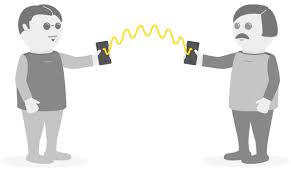
There
are already some pizzerias in New York willing to take bit coins for a
10" pepperoni and ATMs that ask if you prefer your funds in cash or
coins - bit coins. The market for these is growing everyday. Even the
Winklevoss twins, those boys involved in the brush-up during the
founding of Face Book have taken a major position in the coinage.
But Not My CPA Friend
No.
He absolutely believes it's a scam. I point out to him that his tech
abilities hardly extend beyond Skype, nor has he a Twitter account to
call his own, but "The technology be damned" is his opinion. And yet it
is both, the public opinion and the economic meaning of what constitutes
money that will determine bit coins' acceptance.
Any article,
coin, gem or device that is broadly accepted as a form of a 'third party
exchange' -- meaning other than direct barter -- and has the means of
'holding value' constitutes money. Now the value may rise or fall as we
often hear of foreign and domestic currency manipulations, but the
"money," be it the US dollar, the euro, gold, etc. has acceptance among
an array of users harking back to prior transactions. As an example:
The purchase of Manhattan Island from Native Americans for glass beads worth $24 Dutch guilders in the 19th century, a value of $24 USD then and $1000 today.
So Who's Right?
It
will be some time before we find out if Dick Bove, Bank of America, JP
Morgan and all the thousands of speculators are right or if my CPA
friend ends up with the last laugh. Meanwhile I'm reminded of the song
by Johnny Mercer (1940), sung by the likes of Frank Sinatra, Elvis
Presley even Ricky Nelson... "Fools Rush In"
"Fools rush in where wise men never go,But wise men never fall in love,To get the best start with Bitcoins go to http://tinyurl.com/m9lm96d and be on your way to earning the income you deserve.
So how are they to know."
David Skinner has over 25 years experience in business, management and marketing. He is an often quoted author and sought after public speaker. More examples of David's work, his bio and contact information may be found on his web site http://www.davidskinner.com
Article Source:
http://EzineArticles.com/?expert=David_Skinn
Thursday, 2 April 2015
Bitcoin: What Is It, and Is It Right for Your Business?

OK, so what's Bitcoin?
It's not an actual coin, it's
"cryptocurrency," a digital form of payment that is produced ("mined")
by lots of people worldwide. It allows peer-to-peer transactions
instantly, worldwide, for free or at very low cost.
Bitcoin was
invented after decades of research into cryptography by software
developer, Satoshi Nakamoto (believed to be a pseudonym), who designed
the algorithm and introduced it in 2009. His true identity remains a
mystery.
This currency is not backed by a tangible commodity (such
as gold or silver); bitcoins are traded online which makes them a
commodity in themselves.
Bitcoin is an open-source product,
accessible by anyone who is a user. All you need is an email address,
Internet access, and money to get started.
Where does it come from?
Bitcoin
is mined on a distributed computer network of users running specialized
software; the network solves certain mathematical proofs, and searches
for a particular data sequence ("block") that produces a particular
pattern when the BTC algorithm is applied to it. A match produces a
bitcoin. It's complex and time- and energy-consuming.
Only 21
million bitcoins are ever to be mined (about 11 million are currently in
circulation). The math problems the network computers solve get
progressively more difficult to keep the mining operations and supply in
check.
This network also validates all the transactions through cryptography.
How does Bitcoin work?
Internet
users transfer digital assets (bits) to each other on a network. There
is no online bank; rather, Bitcoin has been described as an
Internet-wide distributed ledger. Users buy Bitcoin with cash or by
selling a product or service for Bitcoin. Bitcoin wallets store and use
this digital currency. Users may sell out of this virtual ledger by
trading their Bitcoin to someone else who wants in. Anyone can do this,
anywhere in the world.
There are smartphone apps for conducting mobile Bitcoin transactions and Bitcoin exchanges are populating the Internet.
How is Bitcoin valued?
Bitcoin
is not held or controlled by a financial institution; it is completely
decentralized. Unlike real-world money it cannot be devalued by
governments or banks.
Instead, Bitcoin's value lies simply in its
acceptance between users as a form of payment and because its supply is
finite. Its global currency values fluctuate according to supply and
demand and market speculation; as more people create wallets and hold
and spend bitcoins, and more businesses accept it, Bitcoin's value will
rise. Banks are now trying to value Bitcoin and some investment websites
predict the price of a bitcoin will be several thousand dollars in
2014.
What are its benefits?
There are benefits to consumers and merchants that want to use this payment option.
1. Fast transactions - Bitcoin is transferred instantly over the Internet.
2.
No fees/low fees -- Unlike credit cards, Bitcoin can be used for free
or very low fees. Without the centralized institution as middle man,
there are no authorizations (and fees) required. This improves profit
margins sales.
3. Eliminates fraud risk -Only the Bitcoin owner
can send payment to the intended recipient, who is the only one who can
receive it. The network knows the transfer has occurred and transactions
are validated; they cannot be challenged or taken back. This is big for
online merchants who are often subject to credit card processors'
assessments of whether or not a transaction is fraudulent, or businesses
that pay the high price ofcredit card chargebacks.
4. Data is
secure -- As we have seen with recent hacks on national retailers'
payment processing systems, the Internet is not always a secure place
for private data. With Bitcoin, users do not give up private
information.
a. They have two keys - a public key that serves as the bitcoin address and a private key with personal data.
b.
Transactions are "signed" digitally by combining the public and private
keys; a mathematical function is applied and a certificate is generated
proving the user initiated the transaction. Digital signatures are
unique to each transaction and cannot be re-used.
c. The
merchant/recipient never sees your secret information (name, number,
physical address) so it's somewhat anonymous but it is traceable (to the
bitcoin address on the public key).
5. Convenient payment system
-- Merchants can use Bitcoin entirely as a payment system; they do not
have to hold any Bitcoin currency since Bitcoin can be converted to
dollars. Consumers or merchants can trade in and out of Bitcoin and
other currencies at any time.
6. International payments - Bitcoin
is used around the world; e-commerce merchants and service providers can
easily accept international payments, which open up new potential
marketplaces for them.
7. Easy to track -- The network tracks and
permanently logs every transaction in the Bitcoin block chain (the
database). In the case of possible wrongdoing, it is easier for law
enforcement officials to trace these transactions.
8.
Micropayments are possible - Bitcoins can be divided down to one
one-hundred-millionth, so running small payments of a dollar or less
becomes a free or near-free transaction. This could be a real boon for
convenience stores, coffee shops, and subscription-based websites
(videos, publications).
Still a little confused? Here are a few examples of transactions:
Bitcoin in the retail environment
At
checkout, the payer uses a smartphone app to scan a QR code with all
the transaction information needed to transfer the bitcoin to the
retailer. Tapping the "Confirm" button completes the transaction. If the
user doesn't own any Bitcoin, the network converts dollars in his
account into the digital currency.
The retailer can convert that
Bitcoin into dollars if it wants to, there were no or very low
processing fees (instead of 2 to 3 percent), no hackers can steal
personal consumer information, and there is no risk of fraud. Very
slick.
Bitcoins in hospitality
Hotels can accept Bitcoin for
room and dining payments on the premises for guests who wish to pay by
Bitcoin using their mobile wallets, or PC-to-website to pay for a
reservation online. A third-party BTC merchant processor can assist in
handling the transactions which it clears over the Bitcoin network.
These processing clients are installed on tablets at the establishments'
front desk or in the restaurants for users with BTC smartphone apps.
(These payment processors are also available for desktops, in retail POS
systems, and integrated into foodservice POS systems.) No credit cards
or money need to change hands.
These cashless transactions are
fast and the processor can convert bitcoins into currency and make a
daily direct deposit into the establishment's bank account. It was
announced in January 2014 that two Las Vegas hotel-casinos will accept
Bitcoin payments at the front desk, in their restaurants, and in the
gift shop.
It sounds good - so what's the catch?
Business owners should consider issues of participation, security and cost.
•
A relatively small number of ordinary consumers and merchants currently
use or understand Bitcoin. However, adoption is increasing globally and
tools and technologies are being developed to make participation
easier.
• It's the Internet, so hackers are threats to the
exchanges. The Economist reported that a Bitcoin exchange was hacked in
September 2013 and $250,000 in bitcoins was stolen from users' online
vaults. Bitcoins can be stolen like other currency, so vigilant network,
server and database security is paramount.
• Users must carefully
safeguard their bitcoin wallets which contain their private keys.
Secure backups or printouts are crucial.
• Bitcoin is not
regulated or insured by the US government so there is no insurance for
your account if the exchange goes out of business or is robbed by
hackers.
• Bitcoins are relatively expensive. Current rates and selling prices are available on the online exchanges.
The
virtual currency is not yet universal but it is gaining market
awareness and acceptance. A business may decide to try Bitcoin to save
on credit card and bank fees, as a customer convenience, or to see if it
helps or hinders sales and profitability.
Are you thinking about accepting Bitcoin? Do you already use it? Share your thoughts and experiences with us.
To get the best start with Bitcoins go to http://tinyurl.com/m9lm96d and be on your way to earning the income you deserve.
To get the best start with Bitcoins go to http://tinyurl.com/m9lm96d and be on your way to earning the income you deserve.
You can learn all about bitcoin mining, block chains (the database), miner pools, wallets, and transactions at https://bitcoin.org/en/ or http://www.coindesk.com as well as YouTube videos.
Article Source:
http://EzineArticles.com/?expert=E_Speidel
Thursday, 19 March 2015
Bitcoin 101 - How To Buy/Get Your First Bitcoins
To get the best start with Bitcoins go to http://tinyurl.com/m9lm96d and be on your way to earning the income you deserve.
Wednesday, 11 March 2015
Life Inside a Secret Chinese Bitcoin Mine
To get the best start with Bitcoins go to http://tinyurl.com/m9lm96d and be on your way to earning the income you deserve.
Tuesday, 24 February 2015
Bit Coin Vulnerability: From Outside and Within
 Right across the Internet the words 'Bit' and 'Coin' are becoming
synonymous with how to buy and sell things. Like the last big invention
in buying and selling online, PayPal, Bit Coin is making its mark and
stamping it hard.
Right across the Internet the words 'Bit' and 'Coin' are becoming
synonymous with how to buy and sell things. Like the last big invention
in buying and selling online, PayPal, Bit Coin is making its mark and
stamping it hard.
More and more individuals and online businesses are looking to use
Bit Coin as a currency (as are we in the coming weeks and months) and as
such you, the potential user of such a valuable asset, should be aware
of the pitfalls.
Now we would all like to think that regardless of what we do on the
Internet we are safe whilst doing it but the truth is that it just
doesn't work that way. For everything that goes right there is an
individual - or group of individuals - out to cause mischief and mayhem
or simply relieve us of our hard earned money be it virtual or
otherwise.
With online banking having become more secure over the years with
124-bit encryption as standard the ways in which the hacker or online
thief can get at your finances have had to change in relation to the
methods by which they have been thwarted. And to this end now that there
is a virtual currency out there, there are people who will try and
exploit that.
There are a variety of ways in which Bit Coin wallets can be
'drained' of their resources online which is why a great number of Bit
Coin users still favour the old method of keeping a copy offline on
their computer; thus reducing the risk of attack using software and
hardware firewalls.
Whilst the vulnerability that comes from outside is often the actions
of individuals concerned only with 'draining' your wallet the main
vulnerability you might face with a copy of your wallet on a storage
device is that device's failure.
Whilst we cannot go into the specifics as to how certain things are
done we can tell you that a wallet upon first creation using a Bit Coin
software program is unencrypted. To this end the user must opt in to the
encryption scheme and failure to do means that their wallet is
unprotected online. Some hackers even favour attacking the user's
computer with a few to altering the time on the BIOS clock giving the
impression that transactions that have already occurred have not
occurred have yet to occur and can be doubled up on.
Again whilst we have mentioned this in passing we have not going into
specifics and would not dream of doing so but these are some of the
reasons as to why for the most part the majority of Bit Coin users hold
their wallets offline.
And this is where we come in because whilst these wallets are being
held offline i.e. on your hard drive, then they are susceptible to the
same problems as other data on a storage device that has suffered a
failure. Inaccessibility due to bad sectors, a complete failure of the
drive because of a power surge or physical damage, hardware and software
conflicts; all of these are just as likely to render your Bit Coin
unusable as they would with other data such as word processing
documents, photographs, audio and video, spreadsheets; indeed anything
you would store to hard drive.
With this in mind we recommend the following if your drive fails:
1. Switch off the machine immediately the problem occurs.
2. If there are error messages displayed then switch off the machine before the problem can worsen.
3. Disconnect the power to prevent any other users making the problem worse inadvertently.
4. If necessary and possible, remove the computer to a safe location, so that it cannot be used by anyone else.
5. Contact us as soon as possible using the details to be found on our Contact Us page.
To get the best start with Bitcoins go to http://tinyurl.com/m9lm96d and be on your way to earning the income you deserve.
2. If there are error messages displayed then switch off the machine before the problem can worsen.
3. Disconnect the power to prevent any other users making the problem worse inadvertently.
4. If necessary and possible, remove the computer to a safe location, so that it cannot be used by anyone else.
5. Contact us as soon as possible using the details to be found on our Contact Us page.
To get the best start with Bitcoins go to http://tinyurl.com/m9lm96d and be on your way to earning the income you deserve.
About the Author
Sunday, 1 February 2015
Bitcoin For Beginners - Learn How To Mine Bitcoin ! - Part 1
To get the best start with Bitcoins go to http://tinyurl.com/m9lm96d and be on your way to earning the income you deserve.
Thursday, 22 January 2015
What Is a Bit Coin Wallet
Bit Coins are still a relatively new idea but are becoming popular
amongst individuals and companies who wish to carry out transactions
over the Internet. And just as you would keep physical money in a wallet
so too 'Bit Coins' are kept in virtual wallets, either in the so-called
Cloud or on your computer.
So what is a Bit Coin Wallet?
Well a Bit Coin wallet can be a file located either on your hard drive on in the cloud on which the details of your private keys are stored. These keys relate to the amount of 'Bit Coinage' you have and also a detailed record of the transactions carried out using them.
Well a Bit Coin wallet can be a file located either on your hard drive on in the cloud on which the details of your private keys are stored. These keys relate to the amount of 'Bit Coinage' you have and also a detailed record of the transactions carried out using them.
Is there a hardware version?
Yes there is a hardware version of a 'Bit Coin Wallet' and the principle is that nothing other than the information relating to your 'Bit Coinage' and transactions can be saved to it or accessed from it. Some might consider it to be similar in practice to a partition on a hard drive and indeed it can take that form, but it can also be a backup made to compact disc or to a USB storage device.
Yes there is a hardware version of a 'Bit Coin Wallet' and the principle is that nothing other than the information relating to your 'Bit Coinage' and transactions can be saved to it or accessed from it. Some might consider it to be similar in practice to a partition on a hard drive and indeed it can take that form, but it can also be a backup made to compact disc or to a USB storage device.
At the present moment there are no definitive hardware versions in
production but the news is they are coming so for the most part any one
using 'Bit Coins' have the option to do so and save their data via the
cloud or via their own computer or USB device.
We suggest regularly backing up your 'Bit Coin' wallet and by doing
so you are keeping a constant record of what you have and how much you
have spent etc. You are also making it harder for those nefarious,
unscrupulous types on the World Wide Web to rob you of your 'Bit
Coinage' as can be done if they manage to hack your wallet.
A good way to reduce the risk of hacking is to keep your wallet on
your computer as opposed to in the cloud but it is worth remembering
that should you forget the details relating to the wallet then it can
prove difficult to access it again at a later date.
When it comes to 'Bit Coin wallets' on hard drives or other storage
devices we are now regularly being tasked with retrieving such data from
hard drives that have failed. There is sometimes no reason for this
other than the fact that the drive is old and has become unstable or
because it has sustained some kind of fault that was not previously
taken into consideration when the storage of the wallet took place.
We can, and do, recover 'Bit Coin wallets' and do so using many years
of data recovery expertise coupled with the most up-to-date equipment
available to us.
Our experts have over 15 years in the arena of data recovery and
provided that the hard drive has not been reformatted or additional
information written to it during the fail process there is a 99.9%
chance that we can recover all of the data on it including your valuable
'Bit Coinage'.
Contact us with your query via the 'Contact Us' page or telephone to
speak to one of our friendly and professional experts who will give you
advice on how best we can help.
To get the best start with Bitcoins go to http://tinyurl.com/m9lm96d and be on your way to earning the income you deserve.
To get the best start with Bitcoins go to http://tinyurl.com/m9lm96d and be on your way to earning the income you deserve.
About the Author
Thursday, 18 December 2014
What is a BitCoin? Explained - Tech Tips
To get the best start with Bitcoins go to http://tinyurl.com/m9lm96d and be on your way to earning the income you deserve.
Sunday, 7 December 2014
Everything You Wanted to Know About Bitcoin But Were Afraid to Ask
Currency - a medium of exchange, nothing more
If
the day gold died, in what later became known as the Nixon Shock,
hasn't stopped the financial world from spinning, why would currency
going digital send shockwaves throughout the global economy? Since the
beginning of its existence, money has continually transformed and
evolved, but at its core it always remained a medium of exchange.
Economists see currency as widely accepted legal tender issued by a
government and circulating within an economy of a country. But what
would happen if "government" and "country" were taken out of the
definition? Up until not long ago, that was technologically impractical
and scientifically impossible.
And then a mysterious new technology emerged
Seemingly
out of nowhere, but actually the result of a few decades of research
and development by many unknown computer science scientists around the
world. In fact, the first digital currencies, or at least the concept,
existed as early as the mid 90s, around the time the Internet was fully
commercialized. Essentially, they all suffered from one major drawback
that led to their inevitable demise. They all required a central,
trusted third party to administer the issuance of new units and
reconcile payments at the end of the day.
So how is Bitcoin so different?
Bitcoin
emerged in 2009 as the creation of a person under the pseudonym Satoshi
Nakamoto. It became the world's first fully operational, decentralized,
peer-to-peer, digital currency system. Being decentralized,
intrinsically means being self-organizing, a phenomena in which local
individuals achieve global goals without central planning or influence.
Although decentralized systems can be found in nature, the concept is
not easy to grasp in its monetary context, as we are so used to the
voice of central governments and financial institutions orchestrating
our economic lives.
Computer networks and the Byzantine Empire
From
a computer science perspective, establishing trust between unrelated
parties over an untrusted network (like the Internet), is part of a set
of problems known as the Byzantine Generals Problem. The Byzantine army
was chosen to illustrate the problem because it had suffered recurrent
treacheries among the high ranks of its military command. Imagine
several divisions of the Byzantine army camped around an enemy city,
each division is led by its own general. Due to geographic obstacles,
the generals can communicate with each other only through messengers. In
order to achieve victory, the generals must decide upon a common
strategy unanimously. However, some of the generals may be traitors and
will try to prevent the loyal generals from reaching consensus. If the
traitors succeed the attack is doomed to fail.
Fast-forwarding 561 years to the time of this article
So
how did Bitcoin manage to build a trust component that will avert
unfair dealing in a decentralized, peer-to-peer network? The simple
answer is by successfully implementing and combining two mechanisms
known as 'digital signature' and 'proof of work'. The former proves the
authenticity of each transaction, so to spend money, you first have to
prove you are the rightful owner of the money. The latter manages the
issuances of new Bitcoin units (aka "mining") and reconciles all
transactions over a fixed period of time (aka "blockchain").
The concepts that lie behind Bitcoin - simplified
- Bitcoin address in its most abstract form is the parallel to a bank account. It is identified by a long sequence of letter and numbers, similar to your bank account number. Each Bitcoin address has its own balance of Bitcoins. But remember, since we're dealing with a decentralized network, there are no centralized entities such as banks in the picture.
- Bitcoin wallet is a piece of software that runs on your computer, mobile device or hosted online. The wallet grants you access to your set of Bitcoin addresses. In a similar way to email addresses, you can use your wallet to "open" as many "accounts" as you wish at no cost. In fact, it doesn't even require an Internet connection to create a new Bitcoin address, as the number of available addresses is almost as high as the number of atoms in the entire world. So the chance someone else already taken your address is nearly zero.
- Ledger balance. At this point you must wonder, if there's no central entity in the picture, who keeps track of the accounts and their corresponding balances? Well, a copy of the ledger is maintained on each and every wallet that forms part of the Bitcoin network. Differently than your bank account, where you have access only to your transactions, your Bitcoin wallet stores all the Bitcoin transactions ever made since it all began in 2009.
- Bitcoin transactions. In order for you to send X units of Bitcoin from your address to a recipient address, all your wallet has to do is broadcast the network that X units should be subtracted from your address and respectively added to the recipient address. Wallets, or "nodes" in the Bitcoin network, will apply that transaction to their copy of the ledger, then pass on the transaction to other nodes, until all nodes in the network are updated.
- Et voilà - this is all there is to it.
The concepts that lie behind Bitcoin - less simplified
Digital signatures 101
As
mentioned earlier, in order to spend Bitcoin funds, a sender has to
prove his authenticity (rightful ownership of the funds) by adding a
digital signature to his transactions. The authenticity mechanism is
achieved by implementing a mathematical model called "public-key
cryptography." Here's how it works:
- Hash function is a mathematical function that takes an input message of arbitrary length (transaction, in our context) and transforms it into a fixed length output called 'hash'.
- Encryption scheme is the process of turning a readable plain text message into an unreadable ciphered text, using an encryption key that specifies how the message is to be encoded.
- Public key and private key is a mathematically related key pair that possesses an interesting mathematical property; a private key signature can only be verified by its matching public key.
- Bitcoin address (revised) is actually a key pair. The private key is known only to its proprietor and is used to digitally sign transactions. The public address is shared with the network and is used by its members to verify the authenticity of a transaction.
- Alice, Bob and Eve are the three archetypal characters in the field of cryptography. They represent party A trying to send a message to party B while a malicious Eavesdropper attempts to tamper with their message. Below is a breakdown of how math achieves authentication:
- Alice wishes to send one Bitcoin to Bob.
- Alice's wallet calculates the hash for the transaction.
- The hash is encrypted using Alice's private key to create the digital signature.
- The hash and its digital signature are broadcasted to the network as one packet.
- All other wallets on the network decrypt the digital signature using Alice's public key.
- The hash from the received broadcast is compared with the now decrypted hash.
- If the hashes are identical, the transaction has not been tampered with.
- If the hashes differ, the integrity of the transaction has been compromised by Eve.
Transaction validation 101
After
verifying the authenticity of a sender, the network must verify that he
has sufficient funds in his account to carry out the payment. Remember,
there is no central entity that can decide upon this. Here's how the
Bitcoin network validates transactions:
- Account Reconciliation is an accounting process that compares two sets of records, the cash inflow and the cash outflow. The account balance is the net cash flow. Yet, wallets in the Bitcoin network never maintain this figure. So how can they all tell whether Alice has sufficient funds to pay Bob?
- Bitcoin transaction (revised) is comprised of two columns, an input column and an output column. The input column contains information about the origins of the Bitcoins in a transaction, while the output column contains information about where to send the Bitcoins of a transaction. The input column of a transaction actually reference the output columns of previous transactions.
- Ledger balance (revised). The validity of a given transaction is dependent on the validity of its previous transactions and on and on until all transactions ever made are validated. So the Bitcoin "ledger" actually consists of a linked list of all the transactions ever made rather than account balances.
- Unspent output is an output of a transaction which has yet to be the input of another transaction. Simply put, it's Bitcoins that have not been spent.
- Transaction validation. To find out whether Alice has sufficient funds to pay Bob, Bitcoin nodes are required to iterate through all the transactions ever made and add up all of Alice's unspent outputs. But remember, all the transactions ever made reside on each and every wallet in the network, in any case.
Proof of work (mining) 101
Now
that we know that each transaction depends on its previous transactions,
you might be wondering how Bitcoins got into the systems in the first
place? The answer in short: by rewarding its members with newly issued
Bitcoins in return for solving a complex mathematical problem. However,
it is not for the sake of a challenge. The solution for the mathematical
problem allows the Bitcoin network to address a serious security
loophole associated with transaction order - a problem typically related
to decentralized networks.
- Transaction Order. As explained previously, transactions are broadcasted to the network and pass from one node to the other until they reach the entire network. However, there is no guarantee that the different nodes will receive the transactions in the same order as they were created. Again, there's no central entity that can decide upon an agreed order, and it's up to a network to reach that agreement. Failure to do so would inevitably lead to frauds. This is where the Byzantine Generals Problem comes in.
- Double Spending. Imagine Alice has an unspent output of 1 Bitcoin. She sends a transaction to Bob, paying him that 1 Bitcoin. Immediately after this, she sends a second transaction. This time it's to Charlie, paying Charlie with the same 1 Bitcoin. Due to different network capacities at different nodes, it is not unlikely that some nodes would receive the second "double-spending" transaction to Charlie before they receive the one to Bob. Because there is no way to prove which transaction was issued first, the network would reach disagreement on whether it is Bob or Charlie that is the rightful owner of the money.
- Blocks and blockchain are the data structures Bitcoin uses to organize transactions. Transactions that happen at the same time span are grouped together in a block. Each block has a reference to its previous block. The linked blocks are called 'blockchain'. Transactions not yet in any block are called unordered (i.e. not confirmed yet).
- The next block. Any node in the network can choose to opt in and participate in the process of creating the next block in the blockchain. The process is called "mining." What's to be done? Group a set of unordered transactions into a block, and broadcast it to the network as a suggestion for the next block. There will likely be several options to choose from, so the entire network must find a way to decide unanimously which block will be next.
- Mathematical problem. The Bitcoin network will ask its members to find the answer to a special mathematical problem. The block that will contain the answer will be chosen as the next block in the blockchain. The mathematical problem is special due to three vital properties it possesses:
- It lacks an efficient way to solve it and therefore a "brute force" approach has to be used, i.e. trying random values until the answer is found. Statistically, this will take a very high number of attempts.
- It is very easy to verify. Think of Sudoku, hard to solve, but trivial to verify if a given solution is correct.
- The solution for the current block is based on the solution of the previous block.
- Proof of work proves that a node participated in the total network effort of finding a solution to the mathematical problem. On average, it will take a single node several years of computing power to solve a block on its own. Since it is statistically improbable for a node to solve a block on its own, it's unlikely that a node which solved a block would be an adversary node.
- Solved blocks. The entire network achieves consensus by accepting the first solved block to be the next in the blockchain, thus verifying all its transactions. Since the solution for the current block is built upon the solution of the previous block, agreement on the current block actually strengthens the agreement for the previous block as well, and so agreement is built upon as the blockchain continues to grow.
- Mining (Bitcoin issuance). The process of solving a block is rewarded by issuance of new coins into the system and granting them to the block-solving node. This is why it is called "mining". The mining process addresses two central aspects of the system:
- It verifies transactions and safeguards the financial integrity of the system.
- It gradually issues and randomly distributes new coin units. The process is equivalent to a central bank's monetary policy of regulating money supply.
- Block chain branches. Sporadically, more than one block is solved at the same time span, therefore the network has different blockchain branches to choose from. When this happens the network reaches agreement by immediately accepting the longest valid branch. Why? Because block solving is built upon previous block solving. The longer the block branch, the harder it is to solve all its elements, and subsequently the less likely a malicious node will archive it.
- Transaction Order (final). Within the Bitcoin network, the "real" order of transactions is recorded within the blockchain.
So what is the mathematical problem the network is asked to solve?
If you truly dislike math skip this section, curiosity is more important!
- Hash function (revised) is, as explained above, a function that takes an input of arbitrary length and produces a fixed size length output called hash. A fascinating mathematical property of hash functions is that even the slightest change to the input will result in a totally non-predictable drastic change to the output, though the length will remain fixed in size.
- SHA-256 is a cryptographic hash function developed by the U.S. National Security Agency (yes, the one who's on the news quite often recently) which Bitcoin utilizes for solving blocks.
- Cryptographic nonce is nothing but an arbitrary number used to slightly modify the input of a hash function, which will result in an unpredictable hash value as output.
- The mathematical problem all miners in the network are asked to solve is as follow:
- Input = previous hash value + current block + nonce
- SHA-256(SHA-256(Input))? hash value with X number of leading zeros
- The mathematical problem (simplified to words) look for the nonce that when hashed twice with SHA-256 will result in a number that begins with X number of zeros.
- The X number of leading zeros sets the difficulty of the problem. The required computational power to solve the problem increases exponentially as the number of leading zeros is set higher and decreases exponentially as the number of leading zeros is set lower.
- Bitcoin heartbeat. The X number of leading zeros is set by the network, in such a way that it will always take the entire network exactly 10 minutes to solve a problem. If there are more computers in the network, the problem will get harder, if there are less computers in the network the problem will get easier, but it will always take 10 minutes. Therefore the "heart" of the Bitcoin network beats 6 times per hour.
- Hacking the system. On average, a skilled hacker would need a computing power greater than the total computing power of the entire network to be able to solve a block before anyone else does. In capital terms, today it is estimated at USD 500 million for one block.
Economic truths and untruths - deflationary currency
How
generous is the Bitcoin network in rewarding newly issued coins to its
miners, and subsequently, to its total economy? Bitcoin is based on a
predictable issuance rate of 50 Bitcoins for each solved block (that's
every 10 minutes). Every four years that issuance rate gets reduced by
half.
In 2012 the issuance rate went down to 25 Bitcoins for each
solved block. In 2016 it will be further reduced to 12.5 Bitcoins and so
on until 2140, when all 21 million Bitcoins are projected to be issued.
Up until the time of this article around 12 million Bitcoins are in
circulation and roughly 250,000 blocks have been solved. This growth
model approximates the growth pattern at which commodities like gold are
mined.
If you're concerned that the low number of issued Bitcoins
would limit its usability, keep in mind its almost infinite
divisibility. One Bitcoin is divisible down to 1/100 millionth of a
Bitcoin. That equates to one Bitcoin being 100,000,000 Satoshis, the
smallest fraction of a Bitcoin. At present, the number of Satoshis in
circulation is 10-fold higher than that of US cents in circulation.
Bitcoin
by definition is a deflationary currency. Assuming Bitcoin continues to
do well, the demand will grow faster than its fixed rate supply. Each
unit of its currency will then have to encompass a bigger portion of its
economy, thus propagating further the persistent deliberate
deflationary effect. Moreover, if Bitcoin, like other fiat currencies,
would turn to have its M0, M1, M2, etc., then the value of Bitcoin would
be much greater than the number in circulation.
We are taught to
fear deflation more than inflation, believing it depresses economic
growth. Does MV still equal PQ? Perhaps it is easier to perceive Bitcoin
as gold or other type of commodity, with its scarcity and a worldwide
free market determining its value. Differently than fiat currencies,
Bitcoin is not tied to any country's GDP, government debt, debt-to-GDP,
and the likes. It might even be better than gold, a sort of a virtual
gold, as any Satoshi of it can be sent to the other side of the planet
in a second, person to person, with no financial intermediaries.
By
the time of this article, around 100 alternative digital crypto
currencies (aka Altcoins) have emerged, all inspired by and technically
identical to Bitcoin. All will be judged by their ability to achieve the
aims they set out to accomplish. Unlike fiat currency exchange rate,
which is influenced by a country's economic performance and political
stability, crypto currencies compete directly against each other for
market share based solely on their fitness function.
The road that lays ahead of Bitcoin
In
a world of accelerated technological changes, it would be unwise to
predict what tomorrow may bring. There are many factors that may come
into play in the evolution of Bitcoin. If it will run into severe
obstacles, it will rapidly be displaced by another crypto currency that
will overcome the obstacles. In the contrary case, the network effect
will carry Bitcoin to dominance. Whether or not it's Bitcoin, crypto
currencies are here to stay as an intriguing concept and a
groundbreaking technology.
Statutory and regulatory frameworks in
some countries are stacking against Bitcoin, yet there is no evidence so
far to think that Bitcoin could not coexist alongside other fiat
monetary systems. In fact, they may address different market needs and
even complement each other synergistically, like the coexistence of
commodity money and fiat money.
Another factor that mustn't be
disregarded is that Bitcoin is an early stage technology, where millions
of dollars constantly exchange hands, making it a dream target for
faceless international hackers, hostile intelligence services, or just
about any group of hippie coders.
What history has taught us - the music industry
In
1999 Napster was among the first networks that facilitated file
distribution across the Internet, namely MP3 music files. The technology
was based on a central server and proprietary software and a legal
structure of a registered corporation. Within the first six months of
its operation, the Recording Industry Association of America filed a
lawsuit against Napster over copyright infringement, leading to the
their demise.
The next generation of file sharing was KaZaA.
Unlike Napster, this time it was a decentralized peer-to-peer network.
Nonetheless, the legal structure was still of a centralized registered
corporation. A similar fate awaited them, as the Motion Picture
Association of America filed a lawsuit for copyright infringement,
leading to their shutdown.
Then Gnutella appeared. The initial
protocol was developed by a small company acquired by AOL. It was
erroneously released to the internet for just one day, before AOL
discontinued its availability due to legal concerns. One day was all it
took. In less than a week, the protocol had been reverse engineered and
released for download as a free open source software under the Gnutella
name.
At that point, there were no legal entities to sue, so the
music industry started suing individuals. The action proved to be not
very viable and casted a negative image on the music industry. The end
result was that, the more governments and the music industry fought it, the more they cultivated its use.
Eventually,
the music industry took a new approach to the situation. It started to
commercialize file sharing technologies, charging reasonable amounts via
services like Spotify and the new edition of Napster.
Shattering a myth or two
Criminal activity and money laundering.
There have been claims that Bitcoin is a safe haven for criminals and
terrorists to transfer money anonymously. As explained previously, every
transaction in the Bitcoin network is permanently logged and available
for all to see. As a result, it is considerably easy for law enforcement
bodies to trace down any sort of allegedly illegal financial activity.
Bitcoin is a Ponzi scheme.
Bitcoin is occasionally accused of being a Ponzi scheme, a scam where
money from new investors is used to pay off early investors until it all
goes bust. Bitcoin's protocol is open source available for anyone to
investigate, a transparency that dispels this myth. However, there is
one alarming aspect, if interest continues to grow steadily, those who
invested very early in Bitcoin could become the world's first
trillionaires. If, despite all, Bitcoin proves to be an ultra
sophisticated fraud, it will be marked in history as the most
spectacular scheme, without a shadow of a doubt.
Thoughts of liberty and freedom
With
the ever greater flows of information across the globe and now a wiser
world currency, political idealists might start dreaming openly about a
different kind of sovereignty for the whole of humanity. Perhaps a
withdrawal from the nation-state actuality towards a larger democratic
order for all. While it is undeniably captivating to contemplate money
independent of governments, corporations, and other corrupting
influences, it is sadly not even foreseeable in the faraway future.
Still, it's pretty good material for political romanticism.
To get the best start with Bitcoins go to http://tinyurl.com/m9lm96d and be on your way to earning the income you deserve.
To get the best start with Bitcoins go to http://tinyurl.com/m9lm96d and be on your way to earning the income you deserve.
Article Source: http://EzineArticles.com/?expert=Moshe_Luna
Subscribe to:
Posts (Atom)